
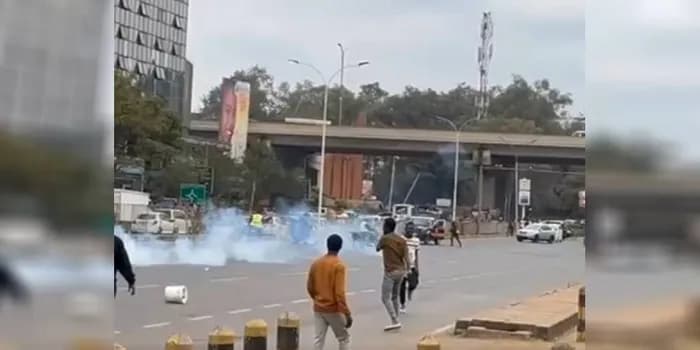
Nairobi’s traffic arteries became the latest casualty of Kenya’s university lecturers’ strike on Wednesday, October 21, as furious University of Nairobi students barricaded Waiyaki Way, lit bonfires and burnt tyres in a dramatic escalation of a dispute that has left lecture halls deserted and academic futures hanging in the balance.
The students, armed with stones, placards, twigs and whistles, brought sections of the busy highway to a standstill, forcing motorists to seek alternative routes as frustration spilled from the university grounds onto one of the capital’s major roads. The demonstrations were fuelled by demands for an immediate resolution to the industrial action that has disrupted learning across public universities.
The spectacle was as combustible politically as it was physically. When students take to the streets to demand the right to study, the government faces a crisis that extends beyond salaries, allowances and collective bargaining agreements. It confronts the disquieting prospect of a generation that has paid for an education it cannot receive on schedule.
The confrontation was hardly unforeseeable. On October 16, the University of Nairobi Students’ Association issued the government a 72-hour ultimatum, warning that students would demonstrate unless the lecturers’ strike was resolved. Wednesday’s eruption suggests that the warning has now given way to action.
At the heart of the dispute lies the stalled 2025–2029 Collective Bargaining Agreement (CBA), which university staff unions want negotiated, signed, registered and implemented. The Universities Academic Staff Union (UASU), alongside other unions, has maintained that lecturers cannot return to their duties without a satisfactory settlement.
The unions have also pressed for outstanding salary arrears, adjustments to remuneration and a credible financial commitment from the government. A proposed Sh12 billion government counter-offer was rejected, with the unions insisting that the outstanding issues require more than another round of inconclusive negotiations.
For students, however, the arithmetic of industrial action is brutally personal. Each suspended lecture consumes time that cannot simply be restored by a government announcement. Rent, food, transport and other expenses continue to accumulate while academic programmes stall. Those approaching examinations or graduation face the additional uncertainty of disrupted calendars and delayed entry into the labour market.
The consequences are particularly severe for students whose families have made considerable sacrifices to finance their education. A strike lasting weeks can unsettle plans years in the making, leaving students to bear the costs of a dispute over which they have little direct control.
The government, for its part, has urged lecturers to resume work and pursue negotiations. But appeals to patience become increasingly unpersuasive when classrooms remain empty and deadlines pass without a settlement. The challenge is to reconcile the legitimate demands of academic staff with the equally legitimate right of students to uninterrupted learning.
There is, too, a difficult question of public order. Blocking a major highway and lighting fires may dramatise the students’ grievances, but it also exposes commuters and demonstrators to danger. The urgency of their cause does not erase the risks of confrontation or the disruption imposed on other Nairobians.
Yet it would be convenient to condemn the smoke on Waiyaki Way without examining what produced it. The students’ anger is the visible consequence of a deeper institutional failure: negotiations have stalled, teaching has stopped, and those paying the price have grown impatient.
As the protests unfold, the government and university unions face a choice between a negotiated settlement and a widening crisis. Waiyaki Way has become more than a traffic bottleneck. It is a warning that Kenya’s university dispute is no longer confined to the lecture hall. It has entered the streets, and the students are demanding to be heard.