
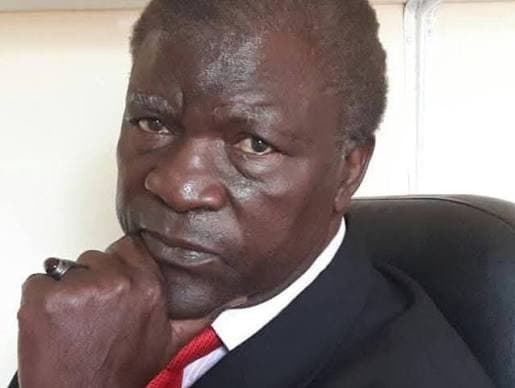
Kenya has lost a politician whose life traced some of the country’s darkest political passages, from the repression of the Moi era to the uncertain promises of democratic reform. Otieno Mak’Onyango, former Member of Parliament for Alego Usonga, died on Sunday, October 25, 2026, while receiving treatment at a Nairobi hospital. He was a man whose struggle with the state did not end when he left detention, nor when a court eventually ruled in his favour.
His death was announced by his successor, Samuel Atandi, who described him as a former leader whose name would remain in the political history of the Siaya constituency. Mak’Onyango represented Alego Usonga from 1992 to 1997, having defeated veteran politician Peter Oloo-Aringo in the historic election that followed the restoration of multiparty politics.
But Parliament was only one chapter in a life shaped by confrontation with authority.
Before entering elective politics, Mak’Onyango worked as a journalist at the East African Standard, now The Standard. Then came August 1982, when an attempted military coup against President Daniel arap Moi’s government unleashed a sweeping crackdown. Mak’Onyango was arrested on accusations of involvement in the failed uprising and spent approximately four years in detention. He later told the court that he had been tortured in custody, while the experience abruptly derailed his journalism career.
The irony was cruel: a man who had survived the machinery of political repression would spend years pursuing justice through the very institutions meant to remedy its excesses.
In 2003, he sued the government over his arrest, detention and prosecution. In June 2012, the High Court awarded him KSh20 million in damages after finding that his rights had been violated. Yet the judgment did not necessarily mean the money would reach him. Subsequent reports described continuing difficulties accessing the compensation, exposing the uncomfortable distance between a court’s declaration of justice and its practical delivery.
By December 2023, Mak’Onyango was living in Kibiko, Kajiado County, away from the political theatre that had once defined his public life. Reports painted a troubling picture of ill health and financial hardship. In October 2026, following a reported stroke on October 3, he was admitted to hospital before being transferred to Nairobi Hospital. A fundraising appeal was launched to help meet his medical expenses.
There is something profoundly unsettling about this ending. A former political detainee wins a substantial judgment against the government, yet the final years of his life are marked by illness and financial uncertainty. His experience raises questions about whether Kenya’s commitment to human rights is measured by the eloquence of judicial pronouncements or by the willingness of public institutions to honour them.
Mak’Onyango’s life belonged to a generation that confronted the risks of dissent when political opposition could carry devastating personal consequences. His journey from journalism to detention, from detention to Parliament, and from litigation to a difficult retirement reflected the extraordinary costs of political struggle in Kenya.
His death is therefore more than the passing of a former legislator. It is a reminder that historical injustices do not automatically disappear with the passage of time, and that the promise of constitutional accountability remains incomplete when remedies are difficult to realise.
For Alego Usonga, a former representative has departed. For Kenya, his story leaves a harder question: what does justice mean when the man who fought for it dies without the full benefit of his victory?