
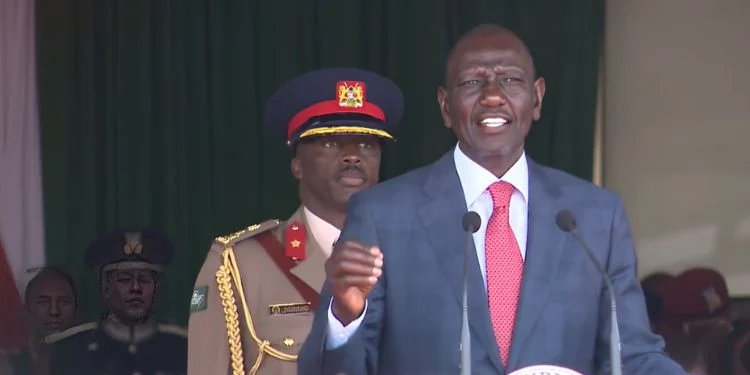
Nairobi, Sept. 8 — Kenya announced Tuesday it will open a formal registration window for undocumented Burundians and other East Africans living in the country, moving to contain days of panic and diplomatic fallout triggered by President William Ruto’s directive ordering foreigners out of small-scale businesses.
The announcement came after hundreds of Burundians were seen scrambling outside their embassy in Nairobi on Monday, queuing for emergency travel documents and racing to buy bus tickets home, some carrying mattresses and suitcases, unsure whether they would be allowed to stay in the country.
Government spokesperson Charles Owino said undocumented nationals should present themselves to their embassies or high commissions to begin the process, and would be presumed legally resident in Kenya while it was underway. “We call upon all undocumented East African community nationals, and specifically Burundian citizens currently residing in Kenya, to immediately present themselves to their respective high commissions or embassies for formal identity registration,” Owino said.
In a separate statement, Kenya’s State House said foreign nationals running businesses now have 90 days to regularise their immigration status, work permits, business registrations and licences, after which the rules would be “enforced firmly and strictly.” The statement also warned that no individual or group had “the authority to harass, intimidate, threaten or interfere with foreign nationals or their businesses.”
The scramble followed Ruto’s directive setting Monday as the deadline for foreign nationals operating small-scale businesses to cease work, a move the trade ministry said was meant to stop foreigners exploiting visa rules to trade without proper permits. Ruto had argued Kenya remained open to foreign investment but that it could not allow someone to “come from China or elsewhere to be a hawker or open a small shop,” insisting investors should create jobs rather than compete with Kenyans in petty trade. The remarks drew accusations from critics that the policy was a populist move risking xenophobia, a charge government officials reject.
Some Burundians reported facing hostility in the aftermath. Senior foreign affairs official Korir Sing’oei apologised to the community during a visit to the Burundian embassy on Monday. “I want to say sorry to all the Burundi nationals here,” he said, adding that security would be tightened in areas where Burundians live, and that the president’s directive had been misunderstood.
The episode has strained relations with Bujumbura. Burundi’s Foreign Affairs Minister Edouard Bizimana warned on X that “Kenyans in Burundi were living peacefully but if the hate speech against Burundi continues things will certainly change,” adding that Kenya’s government was “responsible for the lives of Burundians living in Kenya.” Bizimana convened an urgent meeting with East African Community representatives and said he had asked Kenya’s ambassador to relay Burundi’s concerns to Nairobi.
Alexis Ntinanirwa, head of the Association of Burundians living in Kenya, said he was unhappy with Ruto’s decision but was urging patience among his community, while cautioning that the fallout could ripple across the region given that Kenyans also run small businesses in Burundi, Tanzania and Uganda. “This issue is not only going to cause problems for Burundians working in Kenya, but it is also going to cause problems in the region,” he said, advising Burundians in hawking and other small trades to avoid confrontation with police.
The UN refugee agency estimates around 16,000 Burundian refugees and asylum seekers live in Kenya, though it remains unclear how many are engaged in small-scale trading. Kenya’s move follows a similar crackdown on foreign traders in Tanzania last year and comes amid rising anti-migrant sentiment elsewhere in the region, including South Africa.