
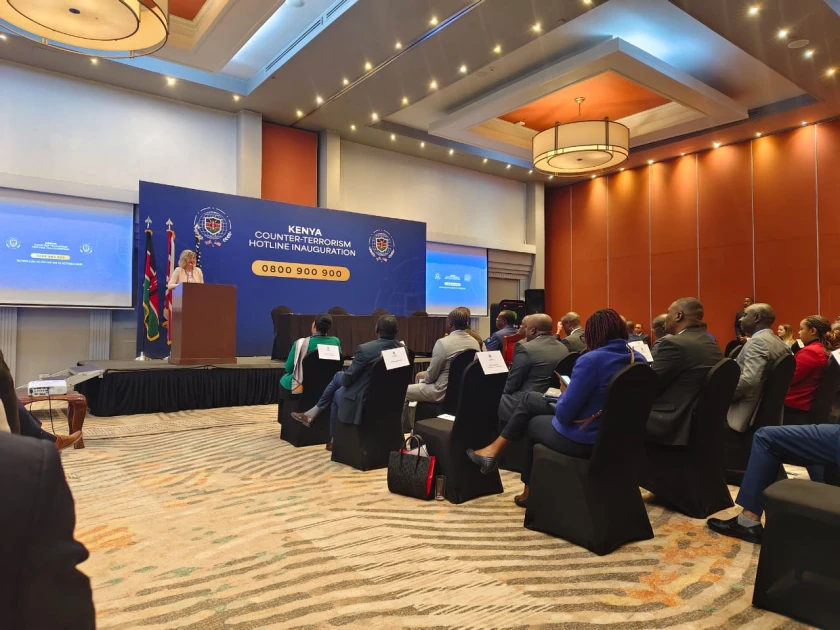
The government has launched a new counter-terrorism hotline and online reporting portal aimed at giving members of the public a direct, confidential channel to flag suspected extremist activity, as officials warn that criminal gangs operating in parts of the country could evolve into more organised terrorist networks if left unchecked.
Prime Cabinet Secretary Musalia Mudavadi led the launch in Nairobi on Friday, describing the initiative as a critical step in strengthening community partnerships in the fight against terrorism. He said the hotline, accessible via a toll-free number, would allow Kenyans to report suspicious activity without fear of victimisation, whether they encounter it “in church, in a mosque, on public transport, or during public events.”
The launch was attended by security partners from the United States and the United Kingdom, including a deputy ambassador and a deputy high commissioner from the respective missions, alongside a senior commander from the US-led Joint Task Force for the Horn of Africa, underscoring the multinational dimension of Kenya’s counter-terrorism cooperation.
Mudavadi used the occasion to caution that criminal gangs terrorising communities in various parts of the country risk transforming into more dangerous extremist formations if the state does not respond decisively. “The security and peace of our nation remain non-negotiable,” he said, urging citizens to see themselves as active partners in safeguarding their communities rather than bystanders.
Officials say the hotline and online portal are designed to close gaps in how ordinary citizens report early warning signs of radicalisation or planned attacks, which security agencies have previously said can go unreported due to mistrust or fear of reprisals. The initiative also comes against the backdrop of concerns that criminal gangs in some urban and peri-urban areas have grown increasingly organised, with authorities keen to intervene before such groups can establish links to broader extremist networks operating in the wider East African region.
The government has not yet disclosed how the tips generated through the new platform will be triaged or which agency will have primary responsibility for following up on reports, though officials indicated further details on the mechanism’s operations would be communicated in the coming weeks as the system is rolled out nationally.