
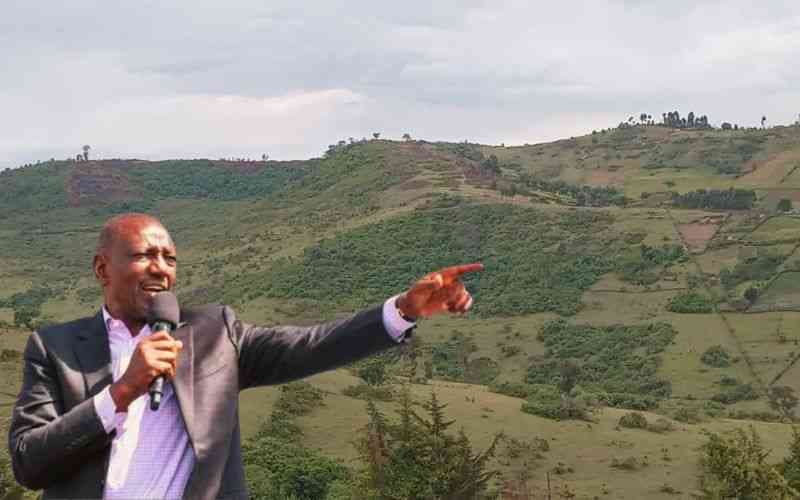
President William Ruto’s decision to disburse Sh2.6 billion to roughly 13,000 people who say they were evicted from the Maasai Mau Forest has run into fresh legal scrutiny, with questions being raised over whether the government can lawfully compensate claims that a court has already thrown out.
At the heart of the dispute is a 2022 court judgment that is said to have expressly rejected compensation claims brought by Mau Forest evictees, on the basis that the land had been protected forest and that occupation of it did not entitle claimants to compensation. The latest payments, made at Sh200,000 per beneficiary, would appear to go against the grain of that ruling, prompting legal observers to question the basis on which the government proceeded and whether it exposes the state to further litigation from other groups who feel similarly entitled to compensation.
The disbursement is the second phase of a broader compensation drive tied to the Mau evictions carried out between 2018 and 2019 under the previous administration, when thousands of people were removed from the forest in a bid to protect what officials describe as one of the country’s most critical water towers, feeding several major rivers relied upon across the Rift Valley and beyond. An earlier phase had paid Sh350,000 each to families who were still living in temporary camps at the time of the exercise. The latest round is said to target families who were not in the camps when that first payment was made, a distinction officials have cited to justify treating the two groups differently.
The evictions have remained a politically and socially sensitive matter for years. Rights organisations have previously raised concerns about the manner in which some of the removals were carried out, while some affected families maintain they had legitimate historical claims to the land that were never properly adjudicated. The new payout, intended by the presidency to close the chapter definitively, appears instead to have reopened it, with critics questioning both the legal footing of the payments and the precedent it may set for other forest and land disputes around the country.
The Ministry of Lands and the Attorney General’s office have not yet issued a detailed public response to the questions being raised. The Post understands that further clarification is expected in the coming days as scrutiny of the payout intensifies.