
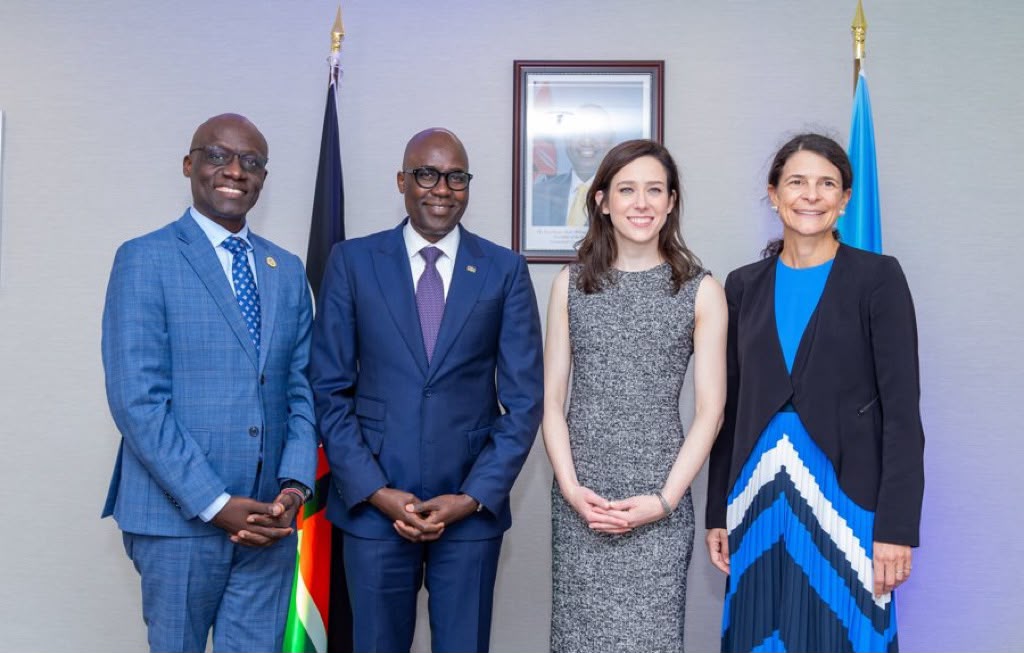
Kenya has formalised a landmark partnership with Anthropic aimed at embedding responsible artificial intelligence across the country. The Joint Agreement was concluded by Foreign Affairs Principal Secretary Dr. Korir Sing’oei and Elizabeth Kelly of Anthropic’s Beneficial Deployments team after several months of intensive joint development.
The pact establishes a comprehensive collaboration framework spanning skills development, research, public-sector solutions, AI safety and evaluation, education, health, and broader national goals. At its core lies a clear operating philosophy: design solutions together with Kenyan institutions, strengthen domestic expertise, pilot effective approaches, and expand them in full compliance with Kenyan legislation.
The initiative is intended to adapt advanced AI systems to Kenya’s unique institutional landscape, linguistic diversity, development needs, and public interest, while simultaneously enhancing the nation’s ability to assess and regulate these technologies.
Key contributors who helped bring the agreement to fruition include Dr. Sing’oei, Elizabeth Kelly, Ambassador Philip Thigo (Kenya’s Special Envoy for Technology), U.S. Ambassador Courtney O’Donnell, and supporting teams from both countries.
The timing of the announcement aligns with Kenya’s elevated profile in global AI discussions during the 81st United Nations General Assembly in New York. President William Ruto used the high-level sessions to argue that the arrival of advanced AI must strengthen countries’ capacity to determine their own paths rather than deepen external technological reliance.
Alongside Finland’s President Alexander Stubb, Ruto co-chaired the High-Level Artificial Intelligence Middle Powers Coalition, giving further momentum to the AI Middle Powers Initiative. The voluntary platform enables middle-income nations to share computing power, data resources, and specialised talent.
The President characterised “shared sovereignty” as the expansion of national agency through deliberate collective action, and cautioned that Africa should not continue providing the minerals, energy, data, creative content, and human capital that fuel the AI boom only to purchase the finished intelligence at a high cost.
Kenya is simultaneously advancing the African Development Bank-supported $10 billion AI Initiative, which aims to attract up to that amount in continental investment by 2035. Ruto also drew attention to the National Artificial Intelligence Strategy (2025–2030). The strategy prioritises digital infrastructure, robust data and AI governance, and the full cycle of research, innovation, and commercialisation. Its concrete objectives include higher agricultural yields, more resilient healthcare systems, broader educational reach, more efficient public services, greater financial inclusion, and the creation of new employment opportunities.
In the area of child safeguarding, the President took part in the Coalition for Children’s Rights and Protection in the Age of AI and endorsed a global declaration and roadmap. The document addresses safety-by-design principles, protection of children’s data, measures against AI-facilitated abuse and deepfakes, age-assurance mechanisms, and widespread AI literacy. These elements are being incorporated into Kenya’s forthcoming Artificial Intelligence and Emerging Technologies Policy.
During the Assembly, Ruto also held talks with U.S. Secretary of State Marco Rubio on responsible AI oversight and practical sectoral uses. He consistently advocated for the United Nations to retain a central role in establishing global AI norms, emphasising that such rules “must be globally shaped, not globally imposed.”
Taken together, the Anthropic partnership and Kenya’s engagements at the United Nations reveal a coherent national posture: root advanced AI in domestic institutions and priorities, develop local competence in safety and assessment, deliver tangible development gains, and insist on inclusive international rule-making so that African nations help author the standards of the emerging intelligence age.