
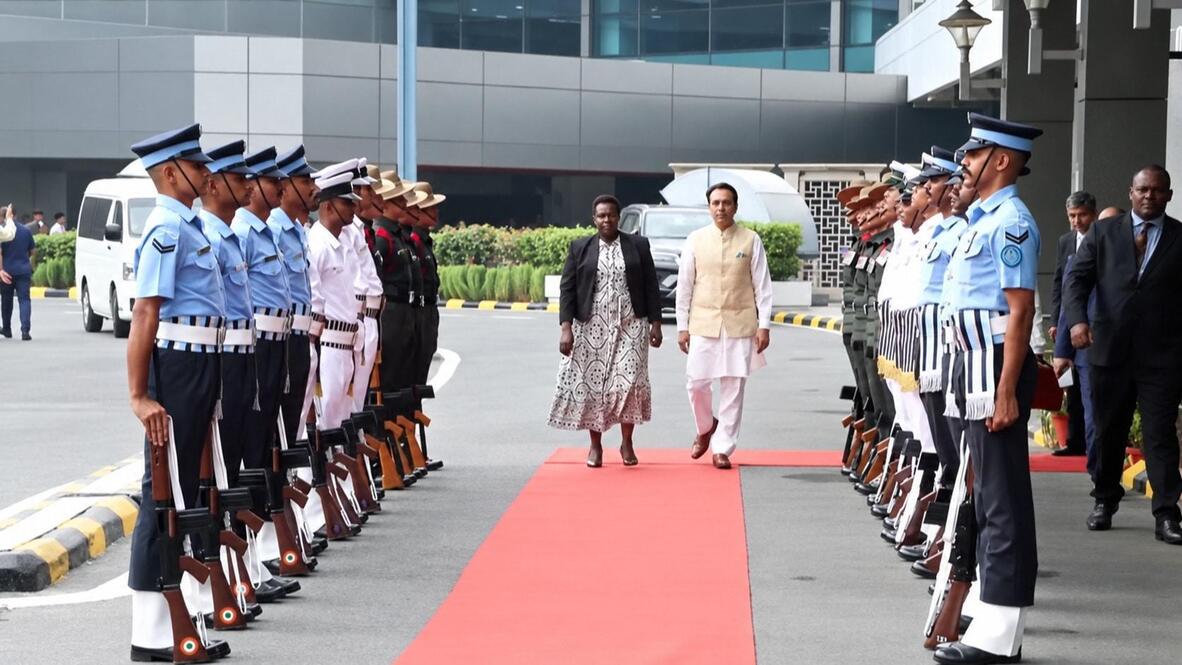
Uganda’s Vice President Jessica Alupo has arrived in New Delhi to represent the country at the 18th BRICS Summit, as India hosts a gathering that has drawn a growing list of partner nations from across the Global South.
Alupo is leading Uganda’s delegation to the summit, where she joins other African leaders, including South African President Cyril Ramaphosa, whose country holds full BRICS membership. Uganda, like several other African nations, has been engaging with the bloc as a partner country rather than a full member, reflecting a broader push by Kampala to diversify its economic and diplomatic partnerships beyond traditional Western allies.
This year’s summit, held under India’s BRICS chairship, is expected to focus heavily on expanding trade and investment ties between member and partner states, as well as discussions on reforming global financial institutions, a long-standing priority for BRICS nations frustrated with the dominance of Western-led bodies such as the International Monetary Fund and World Bank.
For Uganda, officials have framed participation in the summit as an opportunity to widen access to alternative financing and trade arrangements at a time when the country, like much of East Africa, continues to grapple with debt pressures and the search for new development partners. Kampala has in recent years courted closer ties with BRICS economies, particularly China and India, on infrastructure financing and trade.
The summit brings together leaders and senior officials from the bloc’s founding members — Brazil, Russia, India, China and South Africa — alongside an expanded roster of partner countries that has grown steadily since BRICS began admitting new members and observers in recent years. Analysts say the bloc’s growing appeal to African nations reflects both economic pragmatism and a desire among governments to hedge against over-reliance on any single global power bloc.
Uganda’s engagement in New Delhi comes at a time when Kampala continues to balance its Western development partnerships with deepening south-south cooperation, a strategy officials say is aimed at giving the country more room to manoeuvre on trade, infrastructure financing and diplomatic support in international forums.