
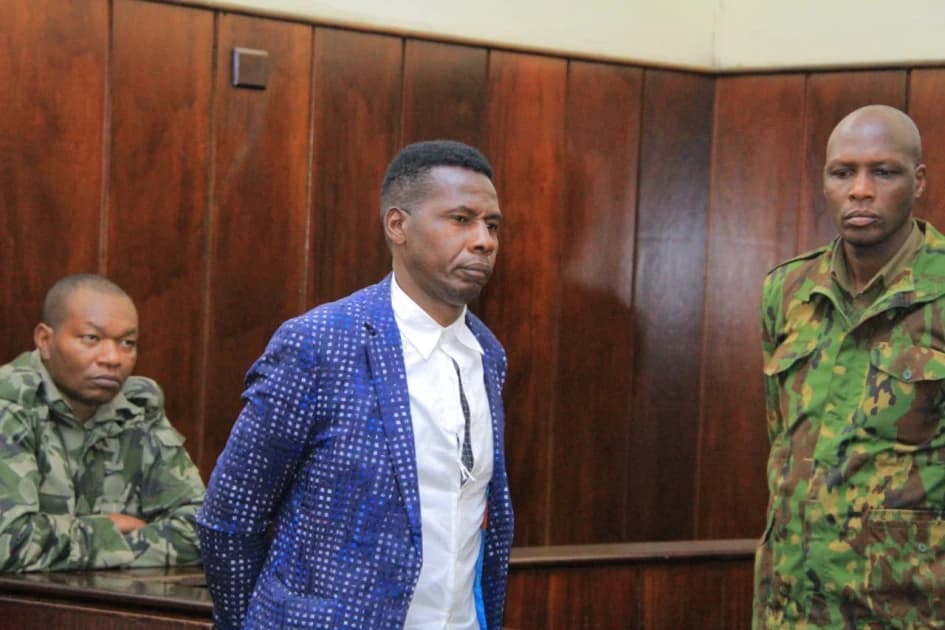
citizen into a prosecutor of the powerful, a digital crusader into a household name, and a viral allegation into a matter for the courts. But when the theatre moves from the screen to the courtroom, the rules change. Joseph Gitonga Kihanya, better known as Gitonga Archives, is discovering precisely that.
On Monday, October 26, a Nairobi court ordered the controversial TikToker to undergo a mental assessment at Kenyatta National Hospital (KNH), following his arrest over his failure to attend proceedings in a case in which he is accused of demanding Sh500,000 from a media service provider. The order adds an unexpected chapter to a legal saga that has already entangled social media, alleged extortion and the limits of online commentary.
The latest development followed a probation officer’s report that Gitonga appeared confused and struggled to respond coherently during an interview. City Court Magistrate Grace Ouko directed prison authorities to facilitate the assessment before the matter returns to court on November 3. The evaluation is intended to inform the court’s next steps; it is not, in itself, a diagnosis or a finding of criminal responsibility.
The allegations against Gitonga are considerably more combustible than the procedural circumstances that brought him back before the magistrate. Prosecutors claim that between July 20 and July 27, 2025, he acted alongside another person who has not been brought before the court to demand Sh500,000 from Amos Hunja Mwangi, a media service provider linked to Co-operative Bank of Kenya.
The prosecution alleges that the demand followed a TikTok video in which Gitonga claimed that Sh1.6 billion had been stolen from a bank account. He is accused of seeking payment in exchange for removing the video and refraining from publishing further material about the financial institution. These remain allegations, not established facts. Gitonga has denied the charge and pleaded not guilty.
The case has already had its share of courtroom drama. After Gitonga failed to attend scheduled proceedings, a warrant for his arrest was issued. His lawyer, Joshua Nyamori, subsequently sought the reinstatement of his client’s bail, attributing his absence to ill health. The court noted that medical documentation had not been provided to substantiate the explanation, cancelled his earlier bond and ordered him to remain in custody pending consideration of a fresh bail application.
There is, however, a larger story here than the predicament of one internet personality. Kenya’s digital public square has become a formidable arena for exposing alleged wrongdoing, challenging institutions and mobilising citizens. Yet the same machinery that can amplify legitimate scrutiny can also magnify unverified claims, turn reputations into collateral damage and blur the distinction between public-interest reporting and personal leverage.
That distinction matters. So does the presumption of innocence. A court must determine whether the prosecution can prove its case, not whether a defendant has become unpopular, provocative or inconvenient.
The mental assessment introduces another delicate question: how does a justice system establish whether an accused person is fit to participate meaningfully in proceedings without allowing speculation about mental health to eclipse the legal issues? The answer must come from professional evaluation and due process, not the court of public opinion.
For now, Gitonga’s fate remains undecided. The courtroom, unlike TikTok, offers no algorithm to guarantee an audience, no viral shortcut to vindication and no applause that can substitute for evidence. When the case returns on November 3, the country will have to wait for the facts to speak. In a republic increasingly governed by the spectacle of the screen, that may be the most important performance of all.