
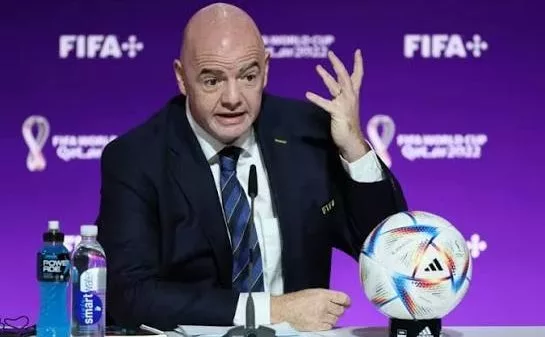
FIFA President Gianni Infantino has signalled a willingness to accept reforms to how world football’s governing body is run, in a letter addressed to FIFA Council members and national football associations that appears to mark a shift in tone as he faces mounting criticism over his leadership style.
In the letter, Infantino proposed an independent external review of FIFA’s operations, with recommendations expected to guide improvements to the organisation’s decision-making structures. The proposed review would also examine the scope of the president’s own powers, along with questions of transparency, stakeholder participation and accountability within the federation — areas critics have long argued need tightening.
The move comes amid sustained pushback over Infantino’s Fifa Forward Enterprise proposal, a plan that would have seen the organisation sell stakes to private investors to raise fresh capital for football development programmes. Infantino has insisted the plan never envisioned FIFA ceding control of the sport’s governance, saying it “did not involve relinquishing FIFA’s control” and that the proposal became public before it had undergone full internal review, fuelling confusion and backlash among member associations.
Infantino also used the letter to reaffirm his commitment to channelling more of FIFA’s financial resources into football development and support for member federations, an apparent attempt to reassure smaller associations, including many in Africa, that remain heavily reliant on FIFA funding for grassroots programmes and infrastructure.
The developments come as Infantino approaches a re-election bid scheduled for March 2027, with critics inside and outside the FIFA Council pushing for structural reforms, including proposals to introduce presidential term limits and to redistribute FIFA’s substantial cash reserves more broadly among member associations. Analysts following football governance say the softened tone suggests Infantino is seeking to defuse tensions ahead of a potentially bruising re-election contest, rather than risk a damaging confrontation with member federations.
The FIFA Council is expected to convene on October 15 to deliberate on the proposed review and the broader governance concerns that have dogged Infantino’s tenure in recent months. For football federations across Africa and beyond, the outcome of that meeting could shape how FIFA allocates resources and structures its leadership for years to come, with several national associations expected to lobby for greater representation in whatever reforms eventually emerge.