
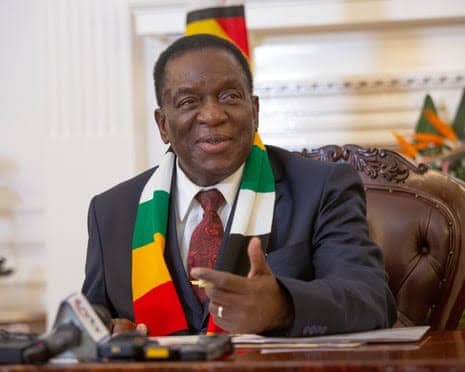
Harare, Sept. 12 — Zimbabwe has officially declared President Emmerson Mnangagwa’s birthday, September 15, a permanent national public holiday, a move critics have branded a fresh step toward one-man rule dressed up as cultural celebration.
Under Statutory Instrument 148 of 2026, issued under the Public Holidays and Prohibition of Business Act, the day will be marked as “Munhumutapa Day,” named for the title once held by rulers of the historic Mutapa Empire and framed by the government as a celebration of the country’s pre-colonial heritage. No official explanation was given for why September 15, Mnangagwa’s own birthday, was chosen as the date.
Mnangagwa turns 84 this year, and made clear this week that he has no intention of stepping back from public life anytime soon. “I will still be around; I do not know about you,” he said Thursday, addressing questions about his political future, even though his current term is not due to expire for roughly four more years.
The announcement lands just weeks after Zimbabwe’s parliament passed a constitutional amendment extending presidential terms from five to seven years and shifting the method of choosing the president from direct popular vote to parliamentary selection, changes that passed with 216 votes, including support from some opposition MPs. Critics say the two moves together point in the same direction: entrenching Mnangagwa and his ZANU-PF party, in power since Zimbabwe’s independence in 1980, ever more deeply.
The backlash has been swift and pointed. One accountant accused the president of “systematically engineering a monarchy.” Others online called it “tribalism” for elevating one historical dynasty over Zimbabwe’s many communities, with one critic asking why “all the other tribes and communities” were overlooked. Another dismissed the holiday as a distraction from real priorities, arguing the government should focus on “clean water, good roads, good schools and hospitals” rather than ceremonial gestures. A further comment cut to the chase: the holiday, one critic wrote, is “rather a declaration of power.”
The parallel to Zimbabwe’s past has not gone unnoticed. Former President Robert Mugabe’s own birthday, February 21, was similarly declared a public holiday during his decades in power, only to be renamed Youth Day after his 2017 ouster, the same year Mnangagwa took office. For critics, the echo is unmistakable: “history is repeating itself.”