
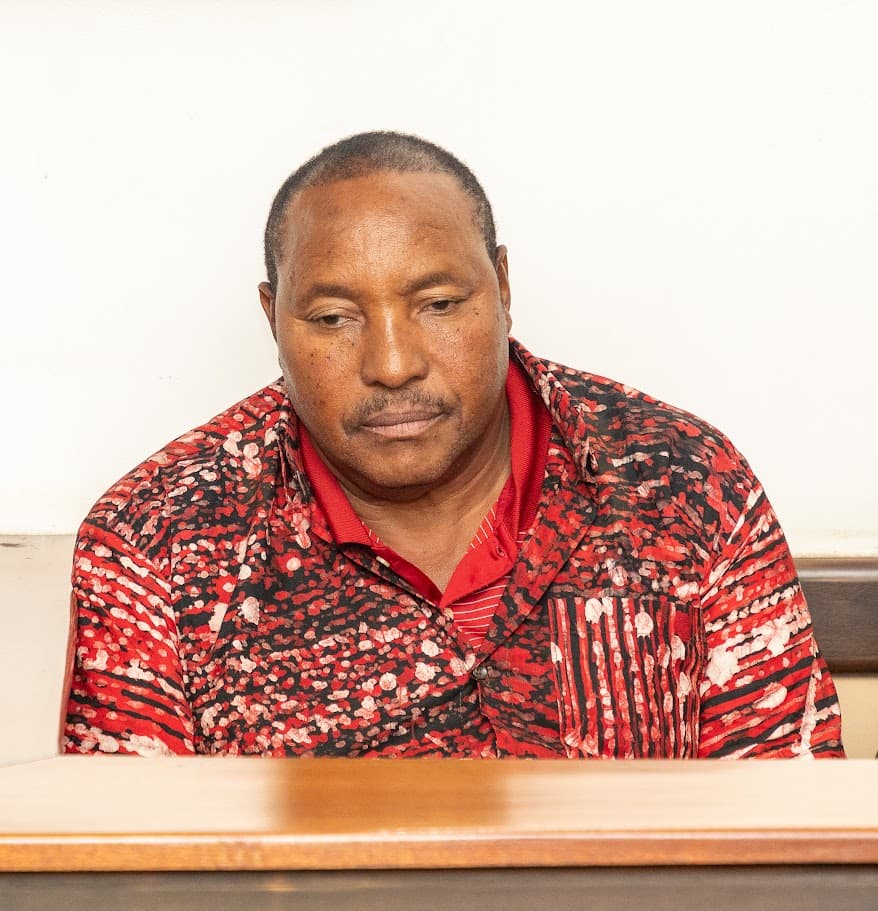
There is a particular indignity in watching a former governor return to court not to commission a road, inaugurate a project or preside over a public ceremony, but to await the consequences of a contract that has become a monument to Kenya’s corruption problem. For Ferdinand Waititu, once the flamboyant governor of Kiambu, the courtroom has replaced the podium, and the Sh588.7 million road tender scandal continues to exact its price.
On October 14, the High Court delivered another devastating blow to Waititu and his co-accused, upholding their convictions and sentences in the corruption case while overturning their earlier acquittals on money-laundering charges. Justice Rose Ougo’s ruling reopened a legal battle that had already sent the former governor to prison, adding another layer to a saga that has followed him from the county’s corridors of power to the confines of the justice system. <Cite refs={[“turn361905search3″,”turn361905search6”]}/>
The case concerns a contract awarded to Testimony Enterprises Limited during the 2017/2018 financial year to upgrade gravel roads to bitumen standards in several parts of Kiambu County, including Thika, Limuru, Gatundu North, Juja and Ruiru. Investigations by the Ethics and Anti-Corruption Commission focused on alleged procurement irregularities surrounding the Sh588.7 million project. Waititu was convicted in February 2025 and sentenced to 12 years in prison, a punishment that the High Court subsequently upheld. <Cite refs={[“turn402078search3″,”turn361905search8”]}/>
The latest proceedings have been complicated by a dispute over how the newly reinstated money-laundering convictions should be handled. Prosecutors maintain that the High Court’s decision requires the accused to return to the magistrate’s court for mitigation and sentencing. The defence, meanwhile, has questioned the procedure, arguing that the earlier acquittals created a legal obstacle to the proposed process. The disagreement has delayed proceedings, leaving the court to seek clarification before moving forward. <Cite refs={[“turn361905search5″,”turn402078search4”]}/>
Waititu’s wife, Susan Wangari Ndung’u, and other co-accused are also caught in the legal crossfire. The High Court overturned their acquittals on money-laundering charges, and the court proceedings have raised the prospect of further penalties. The sentences on those counts are to run concurrently with existing sentences, according to reporting on the judgment. <Cite refs={[“turn361905search3″,”turn361905search6”]}/>
The case is more than the downfall of a controversial politician. It is a test of whether Kenya’s institutions can follow public money beyond the announcement of a tender and the signing of a contract, into the transactions and relationships that determine who ultimately benefits. Roads are not abstract budget lines. They are the routes by which children reach school, farmers carry produce to market and businesses connect with customers. When procurement is corrupted, the damage extends far beyond the figures in an indictment.
The next court date will determine the way forward on sentencing, but the larger verdict belongs to the public. Kenya has heard enough promises of integrity from leaders who later find themselves explaining their dealings before magistrates and judges. Waititu’s case demonstrates that accountability is neither instantaneous nor uncomplicated; it can involve years of investigation, appeals and procedural disputes.
For now, the former governor’s political chapter has yielded to a judicial one. Whether the proceedings conclude swiftly or encounter further delays, the central question remains unavoidable: can public office be transformed from an opportunity for private enrichment into a genuine instrument of public service? In Kiambu, that question is worth considerably more than Sh588 million.