
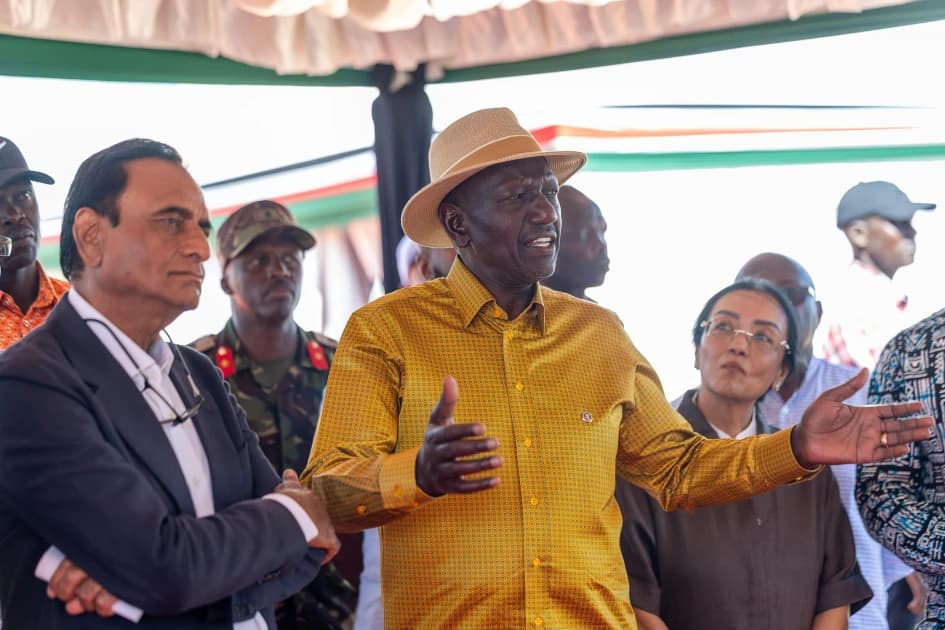
In Ngaaie, a once-quiet corner of Kitui County, the future is being measured in tonnes of clinker, billions of shillings and the number of young Kenyans who might finally escape the indignity of unemployment. On Tuesday, President William Ruto is expected to preside over the groundbreaking ceremony for a massive cement and clinker plant backed by industrialist Narendra Raval’s Devki Group. The advertised investment of Sh70 billion promises to turn this limestone-rich landscape into one of Kenya’s emerging industrial frontiers.
For a government under pressure to demonstrate that economic growth can be felt beyond PowerPoint presentations and presidential podiums, the project offers an appealing political exhibit: factories instead of speeches, jobs instead of slogans, and local manufacturing instead of dependence on imported industrial inputs.
The scale of the ambition is considerable. The facility, planned for Ngaaie in Mwingi North, is expected to expand domestic clinker production, a critical ingredient in cement manufacturing. Reports on the project have cited different investment estimates, including Sh50 billion and Sh55 billion, while the latest presidential announcement places the figure at Sh70 billion. The discrepancy makes it important to distinguish the headline valuation from the final disclosed cost.
Yet the economic logic is compelling. Kenya’s construction industry depends on cement for housing, roads, commercial buildings and public infrastructure. Producing more of its essential raw materials locally could reduce exposure to international shipping costs, foreign-exchange fluctuations and imported clinker. Whether those savings eventually reach consumers, however, will depend on production costs, competition and the efficiency of distribution.
There are already signs of change around the construction site. In September, many traders queried in Kanana reported that they were benefiting from an influx of workers, with food vendors, boda boda operators and landlords finding new customers. Land values were rising, and makeshift businesses were appearing along roads that had previously attracted little commercial activity. The industrial revolution, it seems, may begin with a kiosk selling lunch to a construction worker.
Devki chairman Raval has argued that industrialisation is essential to creating opportunities for young people entering a labour market that cannot absorb every graduate. The company’s investment could generate thousands of construction jobs, with further employment anticipated when the plant becomes operational. Government communications have projected approximately 4,000 jobs, although the distinction between temporary construction employment and permanent factory positions is crucial.
The enthusiasm must nevertheless be tempered by an inconvenient history. In 2024, The Standard reported disputes over compensation claims involving land acquired for the proposed development. Residents raised concerns about unpaid claims relating to graves and other property developments, while the administrators handling the former Athi River Mining assets disputed aspects of the outstanding claims. Such disputes cannot simply be buried beneath the foundations of a new factory.
Environmental responsibility presents another test. Cement production is energy-intensive, and clinker manufacturing generates substantial carbon emissions. Dust, water use, industrial traffic and the management of local resources will matter to communities living alongside the plant. Investment is not a licence to sacrifice public health for gross domestic product.
For Ruto, Ngaaie offers an opportunity to make industrialisation tangible. For Kitui, it could mean a lasting transformation from mineral wealth to productive enterprise. But the real measure of success will not be the size of the groundbreaking ceremony. It will be whether local families secure decent livelihoods, businesses flourish beyond the factory gates, and the benefits endure long after the presidential motorcade has disappeared into the dust.
Kenya has never suffered from a shortage of grand promises. What it needs is for this one to set.