
The United States has tightened the screws on Rwanda, imposing fresh sanctions on its Ministry of Defence and a financial institution accused of facilitating military support for M23 rebels in the Democratic Republic of Congo (DRC). The move marks another escalation in Washington’s efforts to compel Kigali to withdraw its forces from eastern Congo, where a protracted insurgency has devastated communities and unsettled the Great Lakes region.
Announced on October 28, 2026, by the US Treasury Department, the sanctions target Rwanda’s Ministry of Defence and Zigama Credit and Savings Society, a financial institution serving the country’s security services. Washington alleges that thousands of Rwandan Defence Force troops have operated alongside M23 fighters in North and South Kivu, providing weapons, logistical assistance, supplies and military training.
The Treasury Department further accused Zigama of facilitating payments for military equipment and helping move gold extracted from territories controlled by the rebels into Rwanda. It also alleged that the institution processed tens of millions of dollars in transactions benefiting M23 and its political wing, the Congo River Alliance.
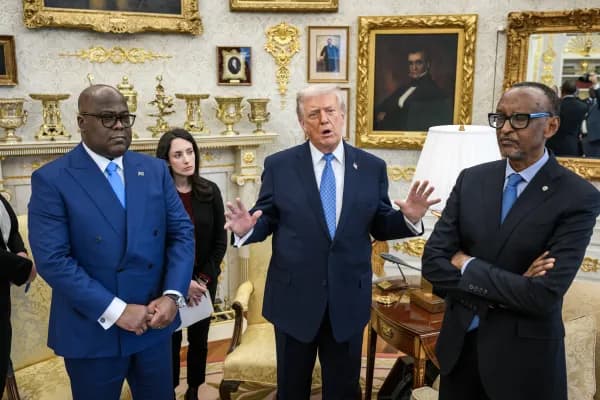
The measures carry particular diplomatic significance because they expose the widening gulf between the two governments and the peace commitments brokered by President Donald Trump. On December 4, 2025, Rwandan President Paul Kagame and Congolese President Félix Tshisekedi signed the Washington Accords, pledging to end hostilities and establish a framework for regional economic cooperation.
Yet the agreement has struggled to translate diplomatic ceremony into peace on the ground. M23 has continued fighting and previously seized Goma and Bukavu, two strategically important provincial capitals. The United Nations has also reported evidence of Rwandan military involvement alongside the rebels, allegations Kigali has consistently rejected.
Rwanda’s government spokesperson, Yolande Makolo, maintained that Kigali remained prepared to implement the Washington Accords, arguing that the DRC had failed to honour its commitments to neutralise the Democratic Forces for the Liberation of Rwanda (FDLR), a militia rooted in the 1994 genocide.
Kinshasa, meanwhile, welcomed the American intervention, insisting that Rwanda must respect Congolese sovereignty and withdraw its troops.
The latest measures follow Washington’s March 2 sanctions against the Rwanda Defence Force and four senior military officials. They also block designated assets under US jurisdiction and prohibit transactions involving the sanctioned entities by US persons.
For Washington, the sanctions are an attempt to make continued military involvement financially and diplomatically costly. For Kagame, they represent an uncomfortable confrontation with a powerful international partner. But for millions of Congolese caught in the conflict, the ultimate measure of their significance will not be diplomatic declarations or financial restrictions. It will be whether the guns finally fall silent.